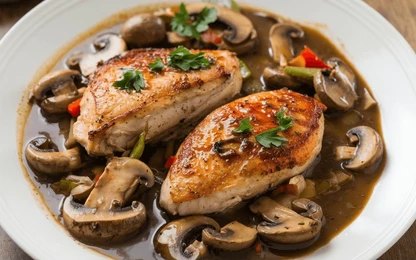
Chicken Marsala: The Comforting Classic You Can Master at Home
Chicken Marsala. The very name conjures images of rustic Italian charm blended with American culinary innovation. It’s a dish that effortlessly bridges the gap between everyday comfort food and a luxurious, restaurant-worthy experience. Golden, pan-fried chicken cutlets enrobed in a rich, deeply flavored Marsala wine sauce – it’s no wonder this Italian-American staple has captured the hearts (and palates) of diners across the globe. Forget the myth that gourmet meals are complex and costly; Chicken Marsala proves you can achieve extraordinary flavor with surprisingly simple ingredients and techniques, right in your own kitchen. For more insights into its rich history and variations, be sure to check out
Chicken Marsala - Article 1.
What Makes Chicken Marsala So Irresistible?
The enduring appeal of Chicken Marsala lies in its perfect harmony of textures and flavors. At its core, it's a brilliant adaptation of traditional Italian *scaloppine* dishes, reimagined to suit American tastes. Imagine tender, thin chicken cutlets, lightly coated in flour, then seared to a beautiful golden crispness. This forms the perfect canvas for the star of the show: the exquisite Marsala wine sauce.
This sauce is a revelation. It transforms simple ingredients into something truly extraordinary. The Marsala wine, a fortified Italian wine, acts as a "secret weapon" ingredient, infusing the sauce with a complex symphony of notes. Picture the richness of a good stock, the subtle sweetness of honey, a hint of tangy vinegar, and the savory depth of Worcestershire, all rounded out with a unique woody nuttiness. When simmered with aromatics like shallots and garlic, and often finished with a touch of cream, it creates a velvety, profoundly flavorful sauce that clings to every piece of chicken. One bite, and it's easy to see why this dish hooks people for life. It’s a masterful blend of savory, slightly sweet, and utterly satisfying, making it a beloved staple in countless households and eateries.
The Magic of Marsala Wine: A Deep Dive into the Star Ingredient
The defining characteristic of Chicken Marsala, and indeed its namesake, is the Marsala wine itself. Understanding this unique ingredient is key to unlocking the dish's authentic flavor.
What is Marsala Wine?
Marsala is a fortified wine, much like port or sherry, originating from the city of Marsala in Sicily, Italy. Its fortification process involves adding a distilled spirit, which increases its alcohol content and shelf life, while also contributing to its distinct, rich flavor profile. This makes it a versatile ingredient, excellent for both cooking and sipping (though for different purposes!).
Dry vs. Sweet Marsala: The Crucial Distinction
When selecting Marsala for your chicken dish, it is absolutely vital to choose **dry Marsala**. Sweet Marsala, while delicious in desserts like tiramisu or zabaglione, will impart an overly sugary taste to a savory dish. Dry Marsala offers a more complex, nutty, and subtly sweet flavor that is richer and more nuanced than typical red wine, without making your meal taste like dessert. Always check the label to ensure you’re getting the dry variety.
Flavor Profile and Culinary Role
Dry Marsala is a powerhouse of flavor. It contributes an incredible depth and complexity that no other single ingredient can replicate. As it simmers, the alcohol cooks out, leaving behind its characteristic notes – a sweet nuttiness, a hint of woody aroma, and a savory backbone. It adds layers that would otherwise require multiple ingredients, making your sauce taste incredibly rich and well-developed with minimal effort.
Sourcing and Substitutes
You'll find dry Marsala wine readily available at most liquor stores. While there are premium, more expensive bottles, an affordable option (often under $20, sometimes even less than $10) will work perfectly for cooking. A bottle will last "forever" in your pantry and can also be used as a substitute for port in other savory dishes, such as slow-cooked pork or braised lamb shanks.
If Marsala is absolutely unavailable, decent substitutes can include **dry sherry**, **Madeira**, or **port wine**. However, understand that these will alter the final flavor profile somewhat, as each has its own unique characteristics. For those avoiding alcohol entirely, a truly authentic Chicken Marsala isn't possible, as the wine is integral. In such cases, consider making a delicious creamy mushroom sauce chicken dish instead, which offers similar comfort without the Marsala. It's also worth noting that due to the quantity of wine used, and despite much of the alcohol cooking off, traditional Chicken Marsala is generally recommended for adults rather than children.
Beyond the Wine: Essential Ingredients for Perfect Chicken Marsala
While Marsala wine is the undeniable star, the supporting cast of ingredients is equally important in building a harmonious and delicious dish.
*
Chicken Breast or Thighs: For Chicken Marsala, boneless, skinless chicken breasts are most common. To ensure even cooking and tenderness, it's crucial to prepare them correctly. Large breasts should be split horizontally to create thinner cutlets, or pounded thin to about 1/2-inch thickness. Alternatively, boneless chicken thighs can be used for a slightly richer flavor and more forgiving texture.
*
Cream: A touch of heavy cream (or thickened cream) at the end adds a luscious, velvety texture and rounds out the sauce beautifully. It provides a luxurious mouthfeel without overpowering the Marsala flavor. For a slightly lighter version, evaporated milk can be substituted, though it will result in a less rich and creamy texture.
*
Chicken Stock/Broth: This provides an essential savory base and adds depth to the sauce. Without it, the sauce might taste a bit flat or one-dimensional. Good quality chicken stock significantly enhances the overall flavor.
*
Aromatics: Shallots (also known as eschalots or French onions) are often preferred over regular onions for their milder, sweeter flavor, which complements the Marsala beautifully without being too pungent. Garlic is, of course, a must-have for its aromatic punch.
*
Flour: A light dusting of all-purpose flour on the chicken cutlets serves two purposes: it creates a crispy, golden crust when pan-fried, and it helps to thicken the Marsala sauce, giving it body and glossiness.
*
Mushrooms: While not always explicitly listed as a core ingredient in every recipe, fresh mushrooms (cremini or button are excellent choices) are a highly popular and recommended addition to Chicken Marsala. Sautéed alongside the chicken and incorporated into the sauce, they add an earthy depth and wonderful texture that truly elevates the dish.
*
Olive Oil and Butter: A combination of these two fats is often used for pan-frying the chicken and sautéing aromatics, providing a rich flavor base and ensuring a beautiful sear.
Mastering the Method: Tips for Restaurant-Quality Chicken Marsala
Creating a show-stopping Chicken Marsala at home is more accessible than you might think. Follow these tips to achieve restaurant-quality results every time:
1.
Prepare Your Chicken Properly: Pounding chicken breasts to an even thickness (around ½ inch) ensures they cook quickly and uniformly, preventing dry spots. This also creates a larger surface area for that delicious crispy crust.
2.
Don't Skimp on the Sear: Achieve a beautiful golden-brown crust on your floured chicken cutlets. This is not just for appearance; the browning creates rich flavors (the Maillard reaction) that will contribute significantly to the sauce.
3.
Deglaze with Marsala: After cooking the chicken, use the Marsala wine to deglaze the pan. Scrape up all those delicious browned bits (fond) from the bottom of the pan. These bits are concentrated flavor bombs that will infuse your sauce with incredible depth.
4.
Allow the Alcohol to Cook Out: Once you add the Marsala, allow it to simmer vigorously for a few minutes. This process evaporates most of the alcohol, leaving behind only the complex, nutty flavors of the wine. You’ll notice the strong alcoholic aroma diminish.
5.
Build the Sauce Layers: Sauté your shallots and garlic until fragrant, then add the Marsala, chicken stock, and any mushrooms. Let it reduce slightly to concentrate the flavors before stirring in the cream.
6.
Finish with Care: Add the cream towards the end of the cooking process, ideally off the direct heat, to prevent it from splitting or over-reducing. Stir gently until the sauce is smooth and emulsified. Reintroduce the cooked chicken to the sauce to warm through.
7.
Taste and Adjust: Always taste your sauce before serving. You might need a pinch more salt, pepper, or a tiny squeeze of lemon juice to brighten the flavors.
Serve your exquisite Chicken Marsala with sides that complement its richness. Creamy mashed potatoes, fluffy rice, a simple pasta, or crusty bread are perfect for soaking up every drop of that incredible sauce. A side of steamed green beans or asparagus provides a lovely contrast and freshness. For more creative serving ideas and variations, don't miss
Chicken Marsala - Article 3.
Conclusion
Chicken Marsala stands as a testament to the fact that elegant, deeply satisfying meals don't have to be complicated. With crispy chicken and an incredibly rich, Marsala-infused sauce, it delivers comfort and luxury in every bite. By understanding the key ingredients, especially the magical Marsala wine, and applying a few simple cooking techniques, you can recreate this beloved Italian-American classic with confidence in your own kitchen. It's an economical, impressive, and utterly delicious dish that promises to become a cherished favorite for adults in your household. So, grab your skillet and uncork that dry Marsala – your next unforgettable meal awaits!